

BILL AND JJ’S EXCELLENT ADVENTURES
IN
SOUTH EAST ASIA
OCT 1-17, 2007
(click the thumbnail photos for a larger image)
The motivation for this trip was JJ’s recent interest in Buddhism and the occasion of a large gathering (an “empowerment”) in Singapore during which participants could receive instructions and teachings from Geshe Kelsang Gyatso. He is a former associate of the Dalai Lama and is instrumental in having popularized a version of Tibetan Buddhism for the Western world.
We decided this would be a great time to tour a part of the world we had never seen and to observe some cultures whose dominant religion is Buddhism. With the exception of the Singapore conference, I arranged all the other excursions myself via Internet. I am not convinced that this “do it yourself” travel is cheaper than going with a pre-arranged packaged tour since we received no special cost breaks or other advantages that the established travel industry enjoys.
The map shows the whole of South East Asia. We visited Singapore, Malaysia,
Thailand and Cambodia.
We departed our home on Oct 1 at 7AM and arrived in Singapore at 8:30 AM Oct 2 California time or 11:30PM Oct 2 local time. We endured a short hop from San Diego to Los Angeles followed by an 11 hour flight to Tokyo, a short lay-over and then 7 more hours to Singapore. We missed out on Oct 2 due to crossing the date line but made it up with two Oct 17’s on the return.
Our hotel was the Grand Plaza Park
 which is conveniently located, comfortable and a bit pricey. The Singapore
dollar was trading at about $1.5S for $1US.
which is conveniently located, comfortable and a bit pricey. The Singapore
dollar was trading at about $1.5S for $1US.
Our first job for Oct 3 was to get JJ registered (along with 2500 other folks) for her “Blissful Journey”
a
for her “Blissful Journey”
a nd
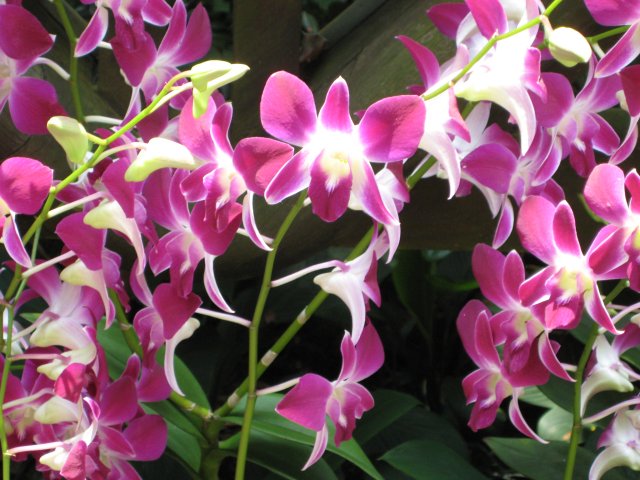
then we were off to check out the Singapore Botanic Gardens (free) and the
Orchid Gardens. We learned there are about 25,000 types of orchids in the world
and new breeds are developed all the time. In fact, we heard that if one
donates about $10,000 (Singapore dollars) to the Botanic Gardens they will name
a new breed after you. (Don’t expect to see any Bill&JJ orchid varieties anytime
soon.)
nd
then we were off to check out the Singapore Botanic Gardens (free) and the
Orchid Gardens. We learned there are about 25,000 types of orchids in the world
and new breeds are developed all the time. In fact, we heard that if one
donates about $10,000 (Singapore dollars) to the Botanic Gardens they will name
a new breed after you. (Don’t expect to see any Bill&JJ orchid varieties anytime
soon.)



We quickly discovered that Singapore does not really count as a foreign country
visit. Everything looks just like the USA with English language, Burger Kings,
StarBucks and shopping malls galore. In fact, the area we were in reminded me
of Crystal City in Northern Virginia with all the spanking new buildings,
underground shopping and rapid transit systems.

Following the Botanic Gardens we took a bus through Orchard Road (the main
shopping area of Singapore) and ended up in the Arab District. Actually, we
forgot the name of our hotel, told the bus driver the wrong name and he,
dutifully, dropped us off at the wrong place. Anyway, we enjoyed hearing the
calls to worship at the Sultan Mosque
 and then the Hajjah Fatima Mosque which has, for some reason, a leaning tower.
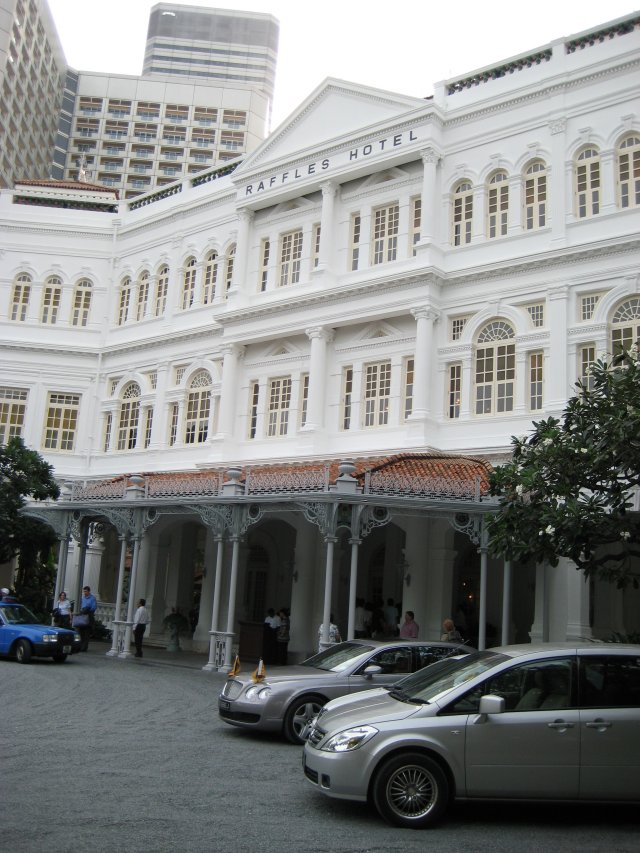
Walking back to the hotel we spotted the historic Raffles Hotel which is one of Singapore’s landmarks
 and
is most noted as the birthplace of the Singapore Sling drink. We also ran into
JJ’s friends, Kathy and Elise, who were enjoying a “high tea” at the Raffles.
Later JJ and I enjoyed a “low tea” at the Raffles.
and
is most noted as the birthplace of the Singapore Sling drink. We also ran into
JJ’s friends, Kathy and Elise, who were enjoying a “high tea” at the Raffles.
Later JJ and I enjoyed a “low tea” at the Raffles.

Incidentally, Sir Stamford Raffles arrived in Singapore in 1819 and is credited with establishing the location as a major trading port for the British Empire. His name is frequently seen and heard in the area.
That evening we went to the Night Safari which is a well advertised Singapore attraction. It is basically a night tram ride through a zoo with some of the animals free to graze near the tram road. A bit too tourist trap for me but others seemed to think it was a cool event.
On our second full day (Oct 4) JJ decided to ditch the first few hours of the
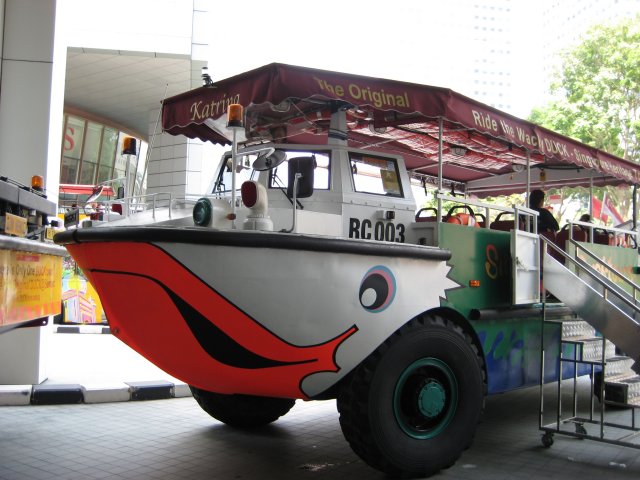
Blissful Journey and do some more sightseeing. We took the Duck Boat
 and
bus tours around the marina and city areas. From the guides we learned that
Singapore is undergoing some major changes and developments (as if they did not
already have enough!). Construction is underway
and
bus tours around the marina and city areas. From the guides we learned that
Singapore is undergoing some major changes and developments (as if they did not
already have enough!). Construction is underway
 for
casinos (this is new for Singapore), another fresh water reservoir, the world’s
tallest ferris wheel,
for
casinos (this is new for Singapore), another fresh water reservoir, the world’s
tallest ferris wheel,
 a
new botanical garden and countless hotels, shopping malls and stuff. They will
also have a Formula One auto race in Aug 2008 on the streets of Singapore.
(Formula One seems to be a big deal over there)
a
new botanical garden and countless hotels, shopping malls and stuff. They will
also have a Formula One auto race in Aug 2008 on the streets of Singapore.
(Formula One seems to be a big deal over there)
The eye-catching Esplanade performing arts center
 has
a unique glass construction that somehow allows day light to enter but the heat
is reflected away. Naturally, all that glass requires some window washers.
has
a unique glass construction that somehow allows day light to enter but the heat
is reflected away. Naturally, all that glass requires some window washers.
The Merlion (combination Mermaid and Lion) is Singapore’s symbol representing both the ocean port and the legendary lion
spotted by a Sumatran prince while visiting the island of Temasek where he
founded a new city of Singapura (Lion City). Anyway, it makes a good story and
lots of interesting statues.
is Singapore’s symbol representing both the ocean port and the legendary lion
spotted by a Sumatran prince while visiting the island of Temasek where he
founded a new city of Singapura (Lion City). Anyway, it makes a good story and
lots of interesting statues.
Over the next three days while JJ was on the Blissful Journey I did some serious
sightseeing around town. The Metro Rapid Transit (MRT) is modern and easy to
use. Unlike most US metros, this one has enclosed door ways (similar to Atlanta
airport) that open only when the train arrives. No jumping on the tracks in
Singapore!
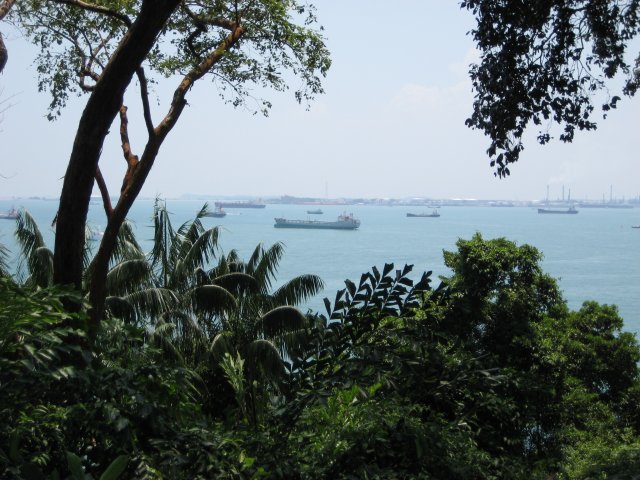
I took the cable car over to Sentosa Island which is a bit of a tourist trap although worth at least one trip. Sentosa is a
large island just off the south coast of Singapore and commands the entrance to
the main commercial harbor, Keppel Harbor. There are lots of things to buy and,
of course, a huge Merlion. My favorite spot was the Fort Silosa military park.
This fort once guarded the harbor entrance and today for $8S entrance fee one
can do a self guided tour. It is a great place for military history buffs. On
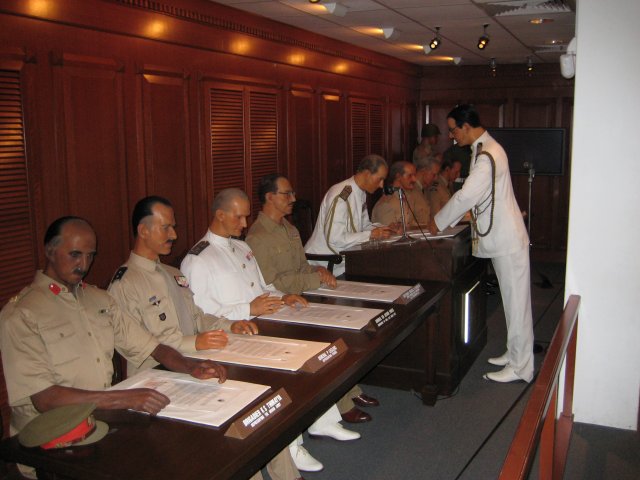
this day I had the entire park to myself. The main theme is the World War 2
Japanese invasion and occupation of Singapore. There are lots of wax figures of
British and Japanese soldiers depicting real life situations there starting in
1885 and then the WW2 era. In one of the dark wax figure areas I stared at a
figure standing on a ladder. The figure stared back as it was a real guy working
on the displays!
which is a bit of a tourist trap although worth at least one trip. Sentosa is a
large island just off the south coast of Singapore and commands the entrance to
the main commercial harbor, Keppel Harbor. There are lots of things to buy and,
of course, a huge Merlion. My favorite spot was the Fort Silosa military park.
This fort once guarded the harbor entrance and today for $8S entrance fee one
can do a self guided tour. It is a great place for military history buffs. On
this day I had the entire park to myself. The main theme is the World War 2
Japanese invasion and occupation of Singapore. There are lots of wax figures of
British and Japanese soldiers depicting real life situations there starting in
1885 and then the WW2 era. In one of the dark wax figure areas I stared at a
figure standing on a ladder. The figure stared back as it was a real guy working
on the displays!

Here is a very brief summary of the WW2 history that is very prominent all over
Singapore. Singapore and Malaysian peninsula were parts of the British Empire
prior to WW2. The Japanese attack was anticipated but the British expected an
invasion from the sea. Instead, the Japanese made a land attack down the Malay
Peninsula commencing at the same time as the Pearl Harbor attack on the US. The
British and their Malay, Indian, Chinese and Australian allies were poorly
equipped and quickly had to surrender on Feb 15, 1942. The surrender was
depicted in one of the wax displays. The Japanese held Singapore for 3.5 years as a colony with lots of hardships for
the residents, especially residents of Chinese descent. The allied soldiers and
many civilians were imprisoned and many perished under slave labor while
building the “Death Railroad” across Thailand to Burma. I think the Bridge over
the River Kwai is part of this story although it may be a different railroad
line.
The Japanese held Singapore for 3.5 years as a colony with lots of hardships for
the residents, especially residents of Chinese descent. The allied soldiers and
many civilians were imprisoned and many perished under slave labor while
building the “Death Railroad” across Thailand to Burma. I think the Bridge over
the River Kwai is part of this story although it may be a different railroad
line.
Near the end of WW2 a major Allied invasion, Operation Zipper, was planned for Sept 1945 to re-capture Singapore. Fortunately for the Allied soldiers, the operation was not necessary as the Japanese surrendered in August after the atomic bomb attacks. This surrender is also depicted in the wax figures.
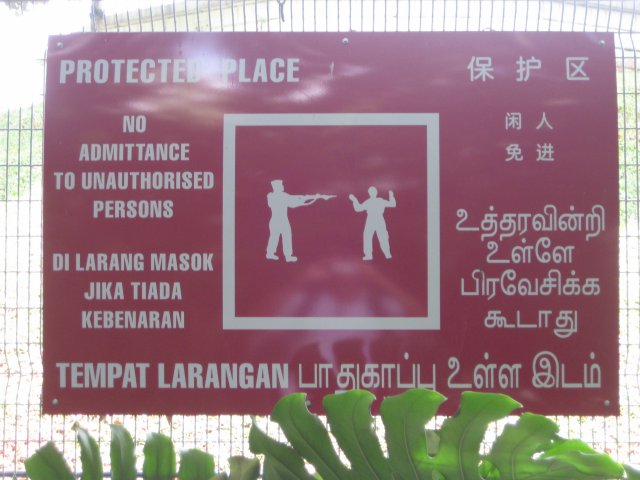
I continued to explore some other areas including the Changi Museum and Chapel www.changimuseum.com which is another WW2 museum. Changi was a POW prison during WW2 and is still a real-life prison today. I read that they do executions on Friday mornings-probably for drug peddlers.


I decided that my favorite part of Singapore is Fort Canning Park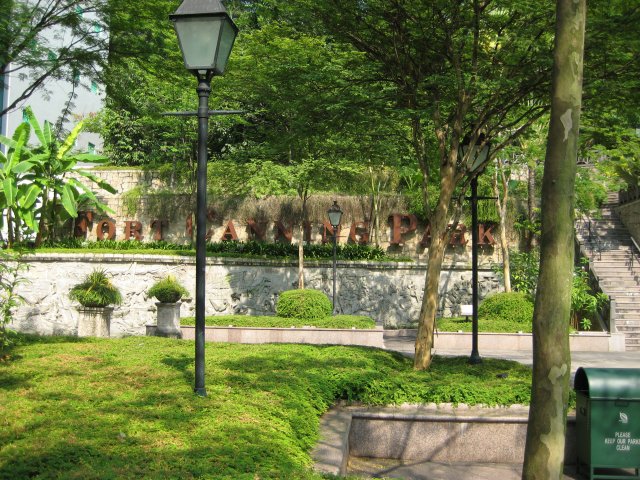

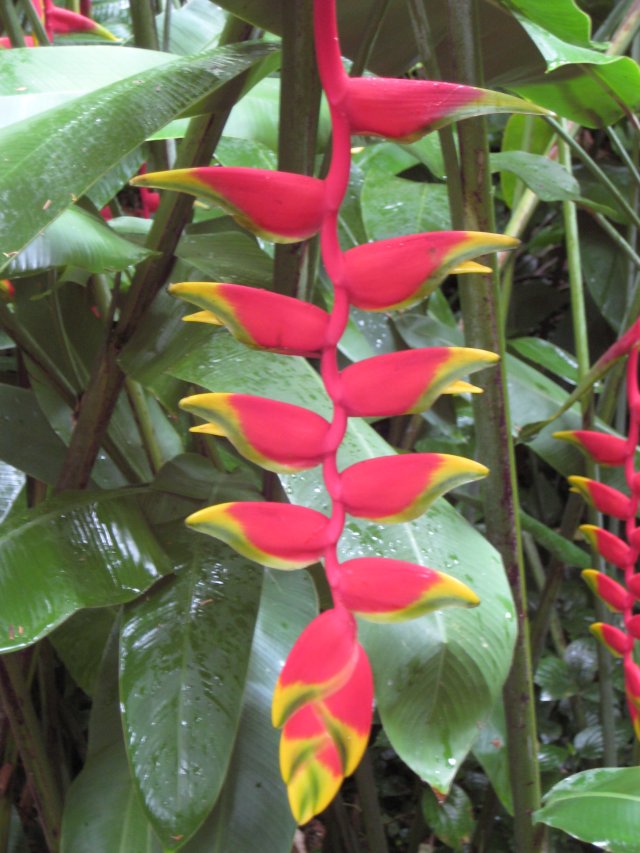
which was just next door to our hotel! This is a beautiful and peaceful place right in the middle of the city. The hilltop once held the Fort which protected the city and was a command and control center during the Japanese invasion of Singapore in 1942. While there I came upon a “Holistic health” festival which included a wonderful vegan buffet that was free! Actually, the food was being provided by a restaurant which JJ and I tried later. This is a unique Indian restaurant (in China Town, of course) where there are no prices for the food. You just pay as much as you think it was worth!! www.annalakshmi.com.sg
Next to the Fort Canning Park one can pass from the peaceful to not-so-peaceful
at the Clarke Quay
 by the Singapore River. Here there are restaurants, loud
bars, music, boat rides and all kinds of stuff to buy. Actually, the river is a
pretty good place to stroll and enjoy the sights and plenty of places to eat and
drink.
by the Singapore River. Here there are restaurants, loud
bars, music, boat rides and all kinds of stuff to buy. Actually, the river is a
pretty good place to stroll and enjoy the sights and plenty of places to eat and
drink.
We finished the first phase of our adventures with Diane's birthday celebration and
pizza by the Singapore River.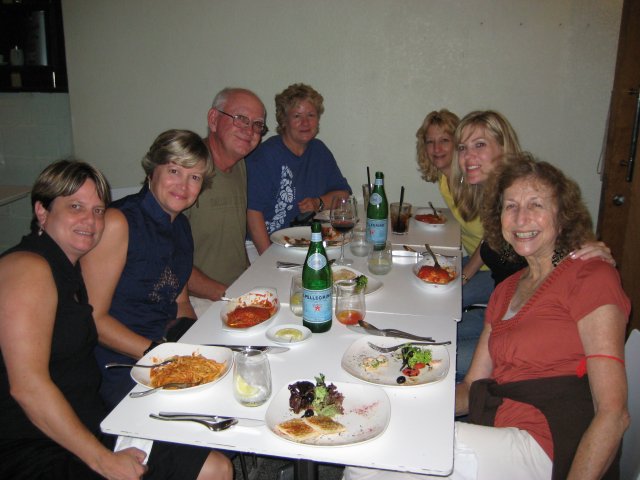
On Monday, Oct 8 we commenced the next phase of our excellent adventure. We boarded the Malaysian train for a 3 day trip to Bangkok, Thailand. Our route took us north out of the Republic of Singapore, up the west side of Peninsula Malaysia, across the Thai border and into Bangkok. This was a bit of adventure as the train ride is not easily arranged. One must buy three separate tickets to complete the trip. Two are from the Malaysia KTM national rail system and one from the Thai rail system. The first two are from Singapore to Kuala Lumpur, the capital of Malaysia (about 7 hours), and then overnight from Kuala Lumpur to the city of Butterworth (about 9 hours). The final leg is on the Thai rail system and is overnight from Butterworth to Bangkok (about 21 hours). The costs for the whole trip for the two of us was about $250US riding first class all the way. Not a bad deal!
Here is a good web site that was a huge help in figuring out the train http://www.seat61.com/index.html
We departed Singapore on the 8:50AM train
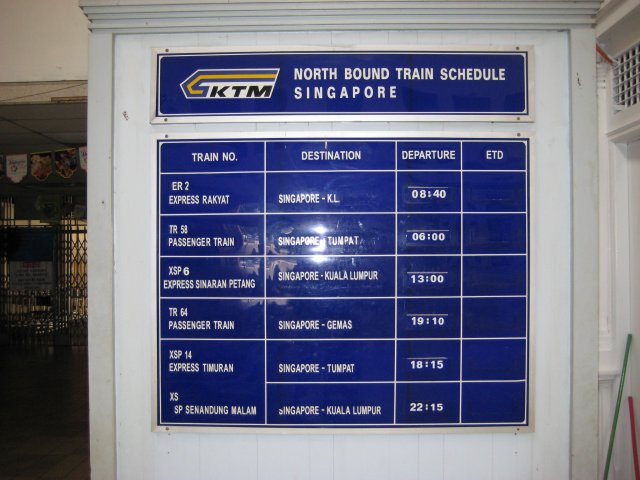 and by 10AM had crossed the Straits of Johur and into the State of Johur, Malaysia. We soon discovered there isn’t much
to see from the train except for a green tunnel of vegetation with occasionally
glimpses of cultivated farm land consisting mostly of bananas and palm oil
plantations as far as we could see. The land here is flat with some mountainous
areas far to the east. I think the east coast of Malaysia is more attractive and
that is where most of the tourist go.
and by 10AM had crossed the Straits of Johur and into the State of Johur, Malaysia. We soon discovered there isn’t much
to see from the train except for a green tunnel of vegetation with occasionally
glimpses of cultivated farm land consisting mostly of bananas and palm oil
plantations as far as we could see. The land here is flat with some mountainous
areas far to the east. I think the east coast of Malaysia is more attractive and
that is where most of the tourist go.
At 3:40PM (right on time!) we arrived at the Kuala Lumpur train station commonly called KL Sentral. We traded our Singapore $ for Malaysia ringgits ($100S=228 Malay ringgit) and had a quick lunch at KFC. Thank heavens for Colonel Sanders! I debated telling the clerks at KFC that I had once actually met the Colonel but decided they may not fully appreciate the significance of such an event.
Now we had until 9PM to go do something in KL before our train departed for
Butterworth. Every one agreed that we should go check out the Petronas Towers
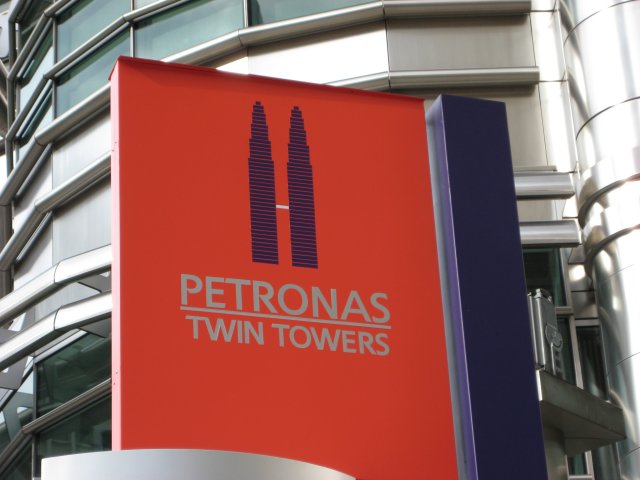

which are the tallest twin towers in the world. We grabbed a taxi for the 5
miles trip but, alas, the traffic was so bad it took an hour to get there. Then
we were informed that the towers are closed to tourist on Mondays! Oh well.
Anyway we got a quick look at this thoroughly modern metropolis and the shopping
malls everywhere. I had an uncomfortable sense as the towers reminded me
somewhat of my visit to the NYC World Trade Center towers many years ago. We
used the very modern and very crowded metro for the return trip to KL Sentral
where we hung out at a Hilton Hotel until departure time.

We had a private cabin for this overnight leg of our train journey. The cabin
was quite comfortable except we had to share the toilets and they were not
pleasant. We never adjusted to the common squat toilets
except we had to share the toilets and they were not
pleasant. We never adjusted to the common squat toilets in this part of the
world. I thought it amusing that the Singapore airport even had a considerate
warning for us westerners.
in this part of the
world. I thought it amusing that the Singapore airport even had a considerate
warning for us westerners.  The toilets on the train did have good instructions
for toilet users which are basically: don’t sit down on the squat toilet and
don’t squat on the sit down toilets.
The toilets on the train did have good instructions
for toilet users which are basically: don’t sit down on the squat toilet and
don’t squat on the sit down toilets.
We arrived at Butterworth at 6AM on Oct 9, Tuesday where we bought our tickets
on the Thai train to Bangkok. We were seduced into hiring our new friend, Abdul
the English speaking taxi driver,
 for a quick tour of the area since we had
until 2:20PM before the Thai train departed for Bangkok. Butterworth is an
uninteresting city but it is just west of the island of Penang and the city of
Georgetown which is the capital of the state of Penang. Penang is a tourist
destination with good beaches and resorts (although we never saw them).
for a quick tour of the area since we had
until 2:20PM before the Thai train departed for Bangkok. Butterworth is an
uninteresting city but it is just west of the island of Penang and the city of
Georgetown which is the capital of the state of Penang. Penang is a tourist
destination with good beaches and resorts (although we never saw them).
Abdul took us across part of the Straits of Malucca (aka Melaka) via a very
impressive suspension bridge and to Penang. Abdul tried in vain to teach us how
to say thank you in the Malay language but soon decided we were too retarded for
such learning. On the island we quickly visited the city of Georgetown (once the
British colonial capital of Penang), Fort Cornwallis (closed)
and to Penang. Abdul tried in vain to teach us how
to say thank you in the Malay language but soon decided we were too retarded for
such learning. On the island we quickly visited the city of Georgetown (once the
British colonial capital of Penang), Fort Cornwallis (closed)
 and three
Buddhist/Hindu temples- The Chinese Goddess of Mercy (lots of incense burning),
a Thai temple with reclining Buddha and urns containing cremated remains of
deceased worshippers and a Burmese temple.
and three
Buddhist/Hindu temples- The Chinese Goddess of Mercy (lots of incense burning),
a Thai temple with reclining Buddha and urns containing cremated remains of
deceased worshippers and a Burmese temple.


At this point, Abdul convinced us that we should hire him for all day as he could take us to see the interior country and we could intercept the train at the Thai border crossing town of Padang Besar. This turned out to be an interesting and somewhat questionable decision but we did have some excitement.
Abdul was doing his morning till evening fast for the Muslim Ramadan season. He
did not eat or even drink water the whole day. We stopped at a service station
for gas and noticed the Muslim prayer rooms for men and women just in case
devout travelers need to stop for one of five daily prayers. Actually, at first
I thought I was going into a men’s toilet until I saw the shower and prayer
rugs. (I never saw Abdul pray on our trip). He is very proud of the Malaysian’s
tolerance for all religions and made a special effort for this photo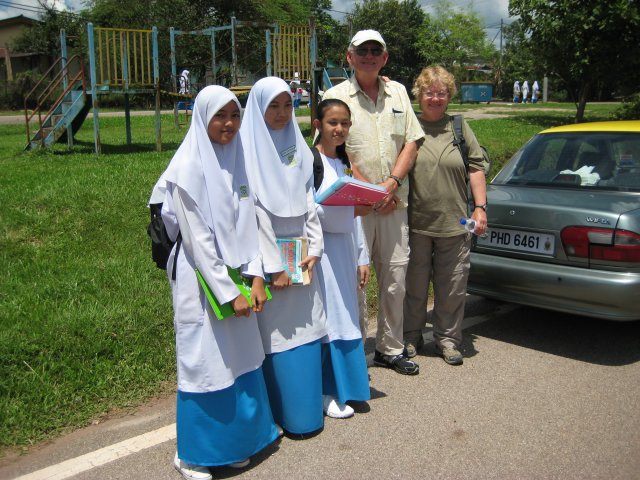 to show the
school girl who chose not to cover her head. Malaysia is a Muslim country and
most women do wear the head scarves. In fact, the scarves were so attractive and
feminine that JJ was about to abandon Buddhism for Islam so she could get some
of those scarves. She got over it.
to show the
school girl who chose not to cover her head. Malaysia is a Muslim country and
most women do wear the head scarves. In fact, the scarves were so attractive and
feminine that JJ was about to abandon Buddhism for Islam so she could get some
of those scarves. She got over it.
We drove along very modern and good highways to check out the rubber and palm oil trees and the rice fields. We even stopped at a rice museum but had little time to check it out.


Abdul told us there are good highways all the way to the east coast via the mountains and jungles. He swore that we could see elephants and tigers if we ever make that trip. Who knows, we might even catch a glimpse of the hantu jarang gigi (Snaggle-toothed Ghost), a big foot creature, that Abdul and my guide book are convinced is real!
We also learned from Abdul one of the favorite English expressions in this part of the world. No matter how dire the situation may seem to us his reply was always, “OK, no problem”.
We learned there are 13 states in Malaysia and 9 of these have their own kings. The kings take turns serving as the main guy in Kuala Lumpur for a one year period (I think). As in all these monarchies, the king is mainly symbolic as the civilian prime minister and parliament have the real political power.
Finally, at 4:45PM we arrived at the rail and highway border crossing at Padang Besar. By this time Abdul was anxious to go home to end his Ramadan fast and keen on getting rid of us. However, he was very courteous and escorted us to the train station and showed me how to first get an exit stamp from Malaysia at one side of the station and then an entrance visa to Thailand on the other end of the station. While madame (aka, JJ) waited, he also took me to the Thai station master dude who could sell me another first class upgrade to a private cabin in Thailand (this upgrade was not available in Malaysia for some reason). Unfortunately, the thing he did not explain was that I had to get the exit stamp when the northbound train arrived. I soon found out the Malaysian immigration station shuts down immediately after the last train passenger has passed through. Anyway, while I was busy getting some Thai bahts (1 $US=32thai bahts) and buying the private cabin upgrade (1188bahts for two), the train came and I missed the Malay exit process! After much stress (OK, no problem!) I ran across the road to the highway immigration station where they were very kind and stamped my passport out of Malaysia. By this time we were sure the train was going to leave us stranded in Padang Besar and I was soaked and exhausted from the run in the humid and hot environment and not feeling too good about our decision to ride with Abdul to the border.
OK, no problem! We had forgotten the time change at the border and still had an hour to wait for the train departure, whew! While waiting to get our Thai entry visa a guy pointed out to us an old sign which said in English that “hippies” are not welcome in the Kingdom of Thailand. The sign further defined hippies as people with long hair, strange and dirty clothes. The guy said that sometimes the Thai immigration authorities will stamp your passport with a SHIT which means “suspected hippy in transit”. Although, we were definitely pretty dirty after 2 days of train travel we did not get a SHIT stamp.
The next day on Oct 10 at 10:50AM we arrived in Bangkok after a very good night in our private car and the porters even brought us dinner and breakfast. While I snoozed JJ awoke on the train to a beautiful sunrise with mountains on the horizon, pink lotus blossoms, local folks working in the rice fields, many Buddhist temples and great views of rounded hills arising abruptly from the flat rice fields.
Although, we passed through some horrid slums as the train approached Bangkok we
were more than compensated upon arrival at our hotel, the Oriental Bangkok. I
may have been a bit careless with the Thai baht to US$ conversion when making
the reservations not realizing that this is among the finest hotels in South
East Asia. Wow, jasmine and orchids presented upon arrival, orchids in our
room,
as the train approached Bangkok we
were more than compensated upon arrival at our hotel, the Oriental Bangkok. I
may have been a bit careless with the Thai baht to US$ conversion when making
the reservations not realizing that this is among the finest hotels in South
East Asia. Wow, jasmine and orchids presented upon arrival, orchids in our
room,
 George Winston playing “Winter into Spring” on the Bose CD in our room
(how did they know that is one of JJ’s favorites?) and a great view of the
river, Chao Phraya, which is a main travel route through the heart of the city.
George Winston playing “Winter into Spring” on the Bose CD in our room
(how did they know that is one of JJ’s favorites?) and a great view of the
river, Chao Phraya, which is a main travel route through the heart of the city.
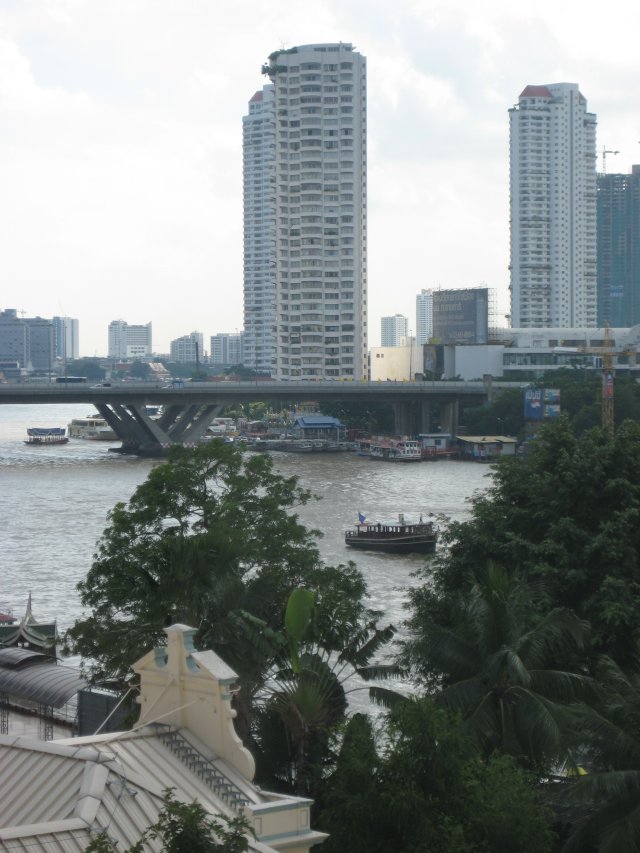
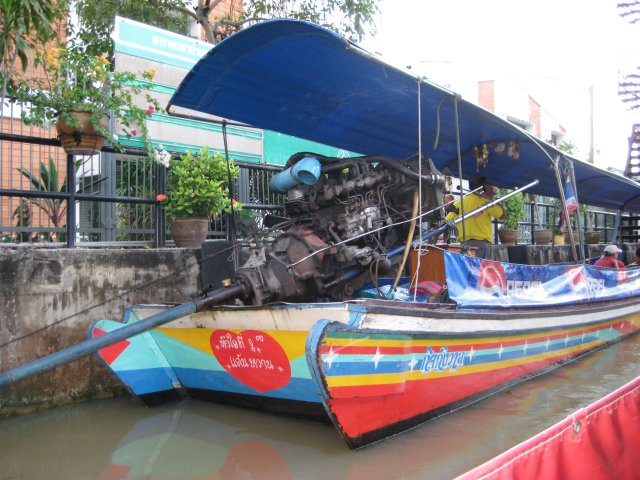
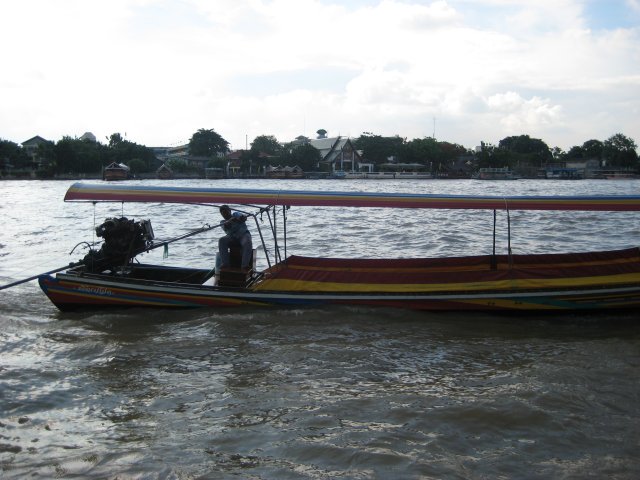
We made good use of our 1.5 days in Bangkok including some rides on the river and adjoining canals in the curious “long tail boats” and for a half day with our guide, Kay.



We saw a lot of “long live the king” signs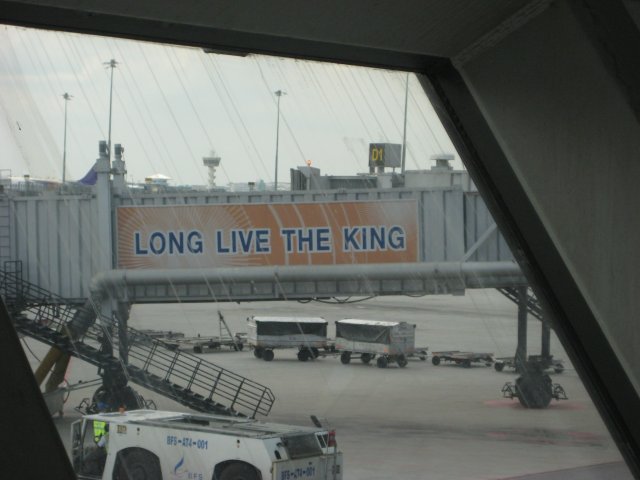 which I soon learned have nothing to
do with Elvis Presley. The Thai people are getting ready to celebrate their
King Bhumidol’s 80th birthday in Dec, 2007. The yellow flags that
are symbols of the king’s special day are all over the place.
which I soon learned have nothing to
do with Elvis Presley. The Thai people are getting ready to celebrate their
King Bhumidol’s 80th birthday in Dec, 2007. The yellow flags that
are symbols of the king’s special day are all over the place. He is the world’s
longest reigning monarch with 60 years on the throne. He apparently has
discovered the elixir of life for all the images of him are of a young looking
man.
He is the world’s
longest reigning monarch with 60 years on the throne. He apparently has
discovered the elixir of life for all the images of him are of a young looking
man.

The Thai kingdom started, more or less, in the 13th to 14th
centuries as it came out from under the Angkor Empire in Cambodia (more on this
later). The capital city of Ayuthaya lasted from about 1350 to 1766 when the
Burmese invaded, killed a bunch of people and took all the gold. (why can’t
these folks just get along?). Today the old capital city, Ayuthaya, is a popular
tourist attraction reachable by auto or by long-tail boat ride up the river. We
did not have time to go there. Eventually, the Thais took over under the
current day Chakri dynasty and the capital was moved down the river to Bangkok.
The kings conveniently go by names of Rama 1 through 9 and Rama 4 was the actual
guy depicted by Yul Bryner in the movie, the King and I. There was a real Anna
who was hired by the King of Siam (Rama 4) to teach his kids English and the
actual black board she used is still there in the Royal Palace.
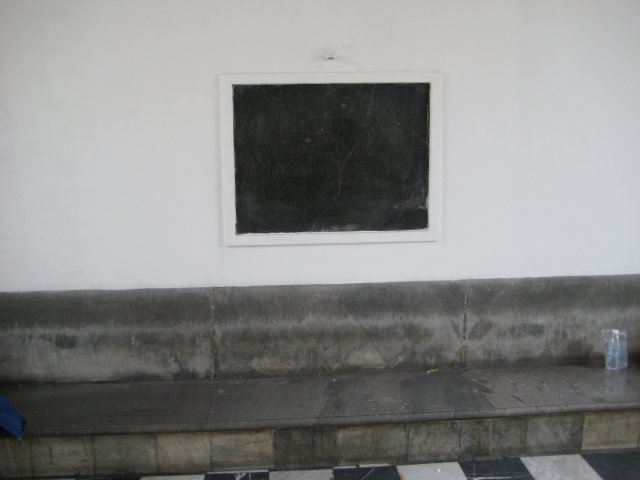 Today the royal
family has another palace but the Royal Palace
Today the royal
family has another palace but the Royal Palace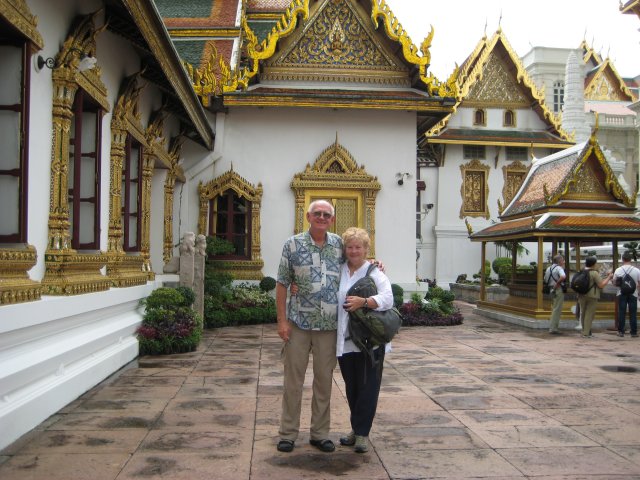
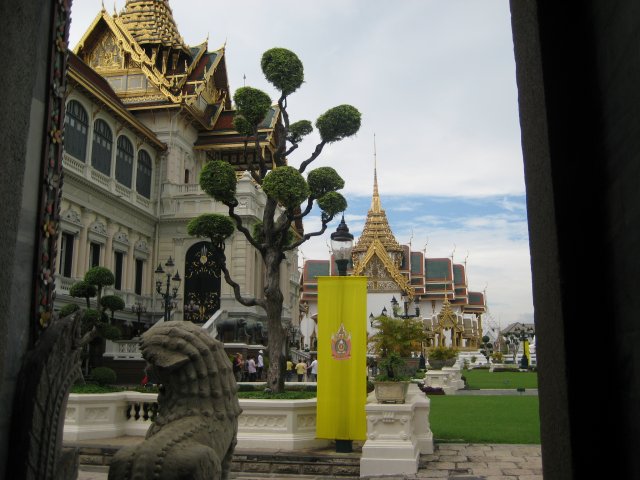 is still used for important
ceremonial events including changing the seasonable robe on the Emerald Buddha.
Also the platform where the king mounts his royal elephant for ceremonies is
depicted in this photo.
is still used for important
ceremonial events including changing the seasonable robe on the Emerald Buddha.
Also the platform where the king mounts his royal elephant for ceremonies is
depicted in this photo.
The elephant is the symbol of Thailand and white (albino) elephants have always
been considered to have special mystical powers.
Most of our morning was spent at the Emerald Temple, the Golden Buddha Temple
and a temple with the world’s largest reclining Buddha statue. 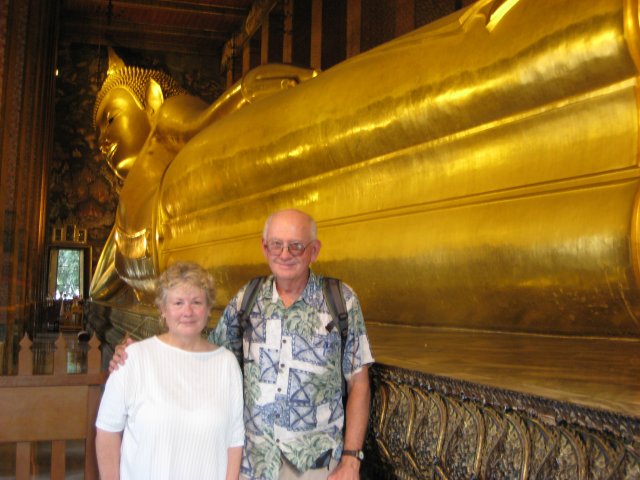
 There is a
mixture of Buddhism and Hinduism at the temples with many Hindu mythical deities
along with the Buddha images.
There is a
mixture of Buddhism and Hinduism at the temples with many Hindu mythical deities
along with the Buddha images.  No photos are allowed in the Emerald Temple (the
Buddha image is only about 2 feet tall, made of jade and has been in place since
1785) but the shrine is very important in the royal ceremonies. The Golden
Buddha is made of solid gold and weighs about 5.5 tons! The Golden Buddha
wasn’t discovered until 1957 since it was hidden under a plaster covering which
fell apart during transit to somewhere! Apparently, the monks had hidden it from
the Burmese back in 1766.
No photos are allowed in the Emerald Temple (the
Buddha image is only about 2 feet tall, made of jade and has been in place since
1785) but the shrine is very important in the royal ceremonies. The Golden
Buddha is made of solid gold and weighs about 5.5 tons! The Golden Buddha
wasn’t discovered until 1957 since it was hidden under a plaster covering which
fell apart during transit to somewhere! Apparently, the monks had hidden it from
the Burmese back in 1766.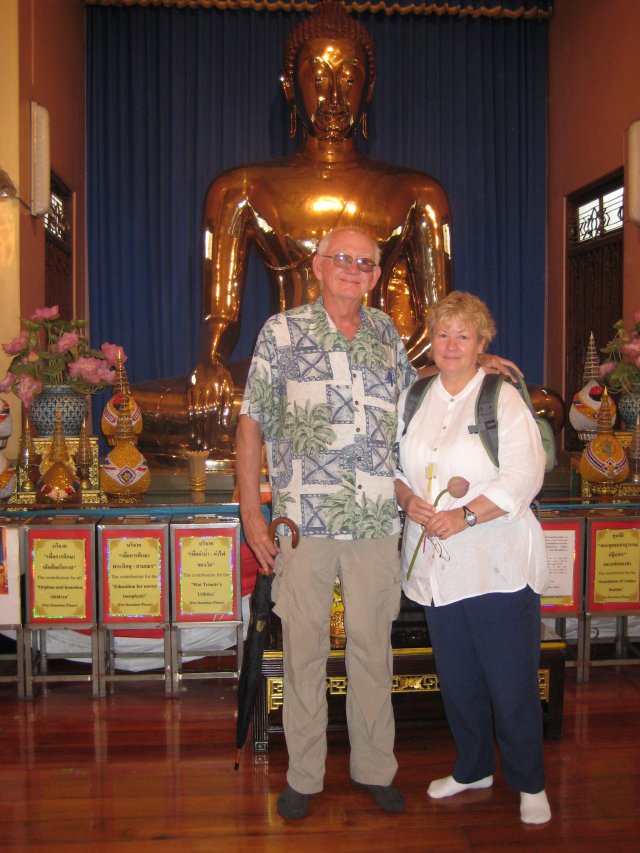
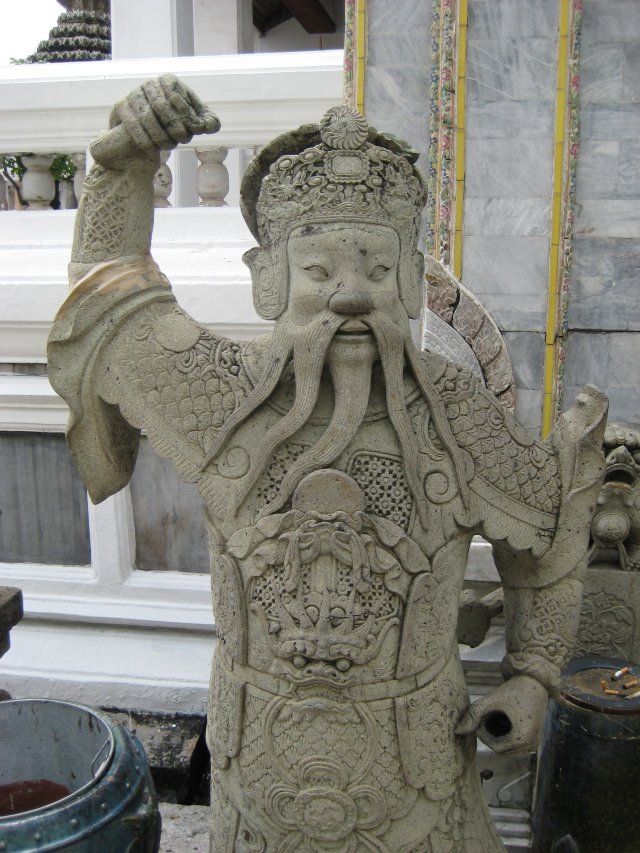
The Chinese played an important role in trade at Bangkok in the early days just
as they do today. There were lots of concrete Chinese statues around the
temples which Kay said were used as ballast in Chinese sailing vessels on their
way to Siam. They did not need the ballast on return so they sold the statues
upon departure from Bangkok.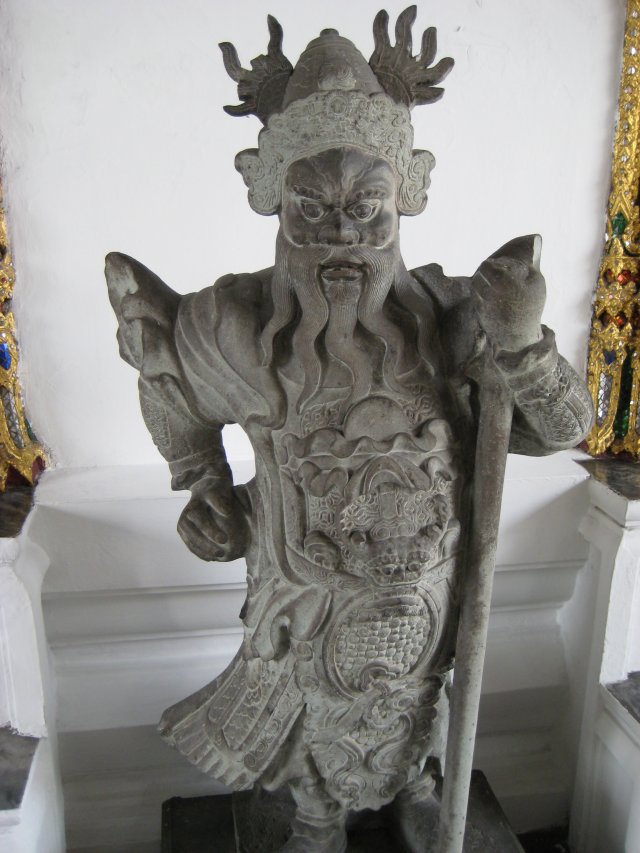
All in all, we found Bangkok to be a delightful city especially along the river’s edge but we had to move on to our next destination.
On Friday, Oct 12 we took a 300 Baht taxi ride out to the brand new Bangkok Suvarnabhum Airport for our 8:30AM departure via Bangkok Air to Siem Reap, Cambodia. After a very short 35 minute flight we arrived at the brand new airport in Siem Reap, zipped through customs, collected luggage and were in our hotel by 10:15. We stayed for 2.5 days (3 nights) at the very nice Angkor Century Hotel.


The only reason that tourist go to Siem Reap is to visit the unbelievable temples of Angkor. Unfortunately, a LOT of tourist are going to Siem Reap (about 1.5 million last year!) so things are very crowded and chaotic at the main temples. The town is really booming with all the tourism (mainly from South Korea, China and Japan) and new, luxury hotels, condominiums and shopping centers are everywhere. Despite this new wealth the town is very much a third world place and the contrasts between the new, old, rich and poor are quite amazing.
We hired the guide services of Lei (in yellow shirt) and a driver for the 2.5 days to show us
around. There are dozens of ancient temples around Siem Reap but for our short
stay we just saw a few of the most popular spots. One could spend weeks here
checking out the temples but after awhile they start to look alike.
for the 2.5 days to show us
around. There are dozens of ancient temples around Siem Reap but for our short
stay we just saw a few of the most popular spots. One could spend weeks here
checking out the temples but after awhile they start to look alike.
We started our tours right away with Lei and headed to the huge lake called Tonle Sap (Tonle=lake and Sap=fresh water). Enroute I noted the clutter of motorbikes on the road and asked Lei if many people get killed in traffic accidents. Yes, lots of people get killed but only locals! Tourists are may not rent the motorbikes. OK, no problem.
We asked about the danger of malaria in this area as we were taking pills for protection. Lei acknowledged there is a danger but if you stay out of the forests after dark and avoid the long-legged, large “tiger” mosquitoes then OK, no problem.
Later we saw a sign outside a children’s hospital asking for blood donations for the children with hemorrhagic dengue fever which is also caused by mosquito bites. Yikes!
In route to the lake Lei gave us a thumbnail sketch of Cambodian history. From the 1st through 15th centuries Cambodia’s main religion was Hindu. Around 800AD a king named Jayavaraman II established the Khmer Empire with its capital city of Angkor located basically at today’s Siem Reap. The Khmer Empire once extended throughout today’s Thailand, Cambodia, Laos and south Viet Nam. There were a bunch of wars with Thailand (Siam) and South Viet Nam and the name, Siem Reap, means Siam Defeated. The capital was moved to Phnom Penh in the 1400s to get a bit further away from Thailand. The French moved in to colonize this area in the mid-1800s and left in about 1953. I thought it interesting that, according to Lei, only old people still speak French. We saw little evidence of French language during our visit.
Cambodia’s more recent history was very dismal indeed. As many of us recall, the communist Khmer Rouge regime ran amok during the mid-1970s killing over 1 million people! There was a big civil war during this time and eventually the victorious north Vietnamese invaded, routed the Khmer Rogue and occupied Cambodia until around 1979. Today the government is somewhat stable with a parliamentary system and three key parties, the dominant one being the Cambodian People Party. (This seemed to be favored by our guide.)
The Tonle Sap is a huge lake (about 90X20 miles) just south of the town of Siam
Reap. The Tonle Sap river then flows south from the lake to the capital city of
Phnom Penh roughly 100 miles away. Actually, during the wet season the river
flows north from Phnom Penh to the lake.
just south of the town of Siam
Reap. The Tonle Sap river then flows south from the lake to the capital city of
Phnom Penh roughly 100 miles away. Actually, during the wet season the river
flows north from Phnom Penh to the lake.
The key attraction at Tonle Sap is the floating village (about 5000 people).

 The
inhabitants are all of Vietnamese descent mostly from soldiers who remained
after the 1979 invasions. For $40 US (US currency is preferred here) we bought
a boat ride
The
inhabitants are all of Vietnamese descent mostly from soldiers who remained
after the 1979 invasions. For $40 US (US currency is preferred here) we bought
a boat ride to the lake. At this time of year the lake actually expands,
flooding all the surrounding forests.
to the lake. At this time of year the lake actually expands,
flooding all the surrounding forests.
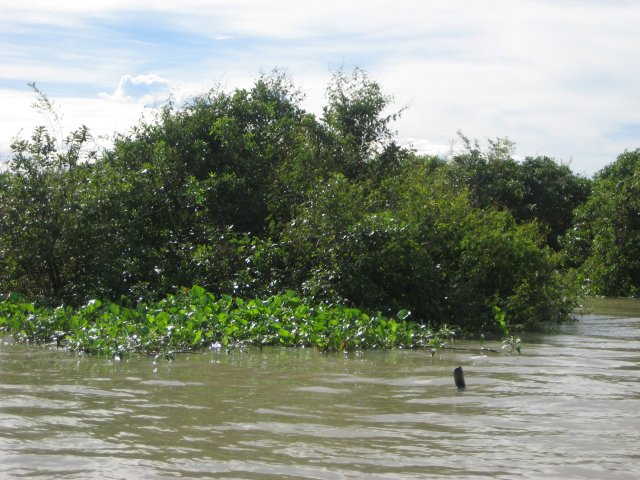 The floating homes move from the lake
inland in the wet season and then back to the lake as the water dries up.
Fishing
The floating homes move from the lake
inland in the wet season and then back to the lake as the water dries up.
Fishing
 is the main occupation for the villagers (except for the ones who sell
drinks, beer, bananas and stuff to tourists on the boats-everthing is $1)
is the main occupation for the villagers (except for the ones who sell
drinks, beer, bananas and stuff to tourists on the boats-everthing is $1)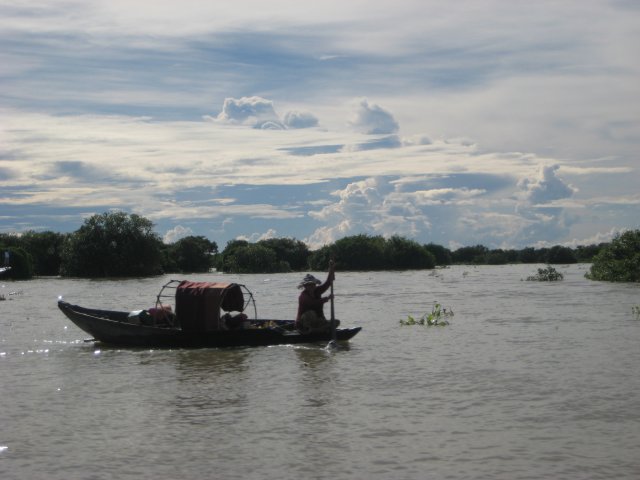
We spotted a few Christian churches -definitely a minority in this Buddhist
land. Also, Lei pointed out that many countries (Japan, S. Korea, China,
others) are helping Cambodia by building schools (even floating schools),
-definitely a minority in this Buddhist
land. Also, Lei pointed out that many countries (Japan, S. Korea, China,
others) are helping Cambodia by building schools (even floating schools),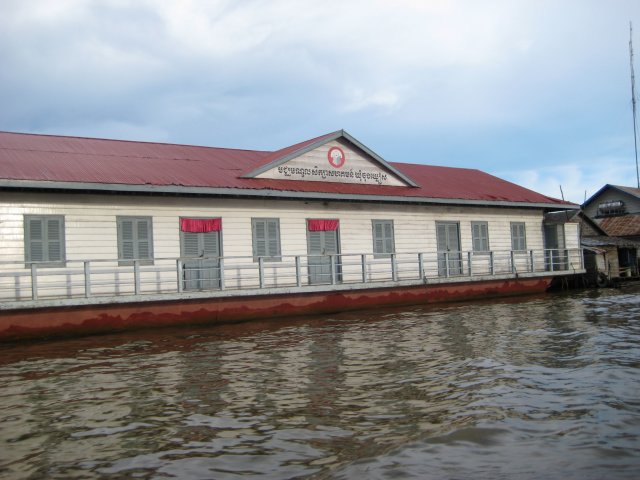 roads,
hospitals and temple reconstruction.
roads,
hospitals and temple reconstruction.
We also spotted the 7 day cruise ship that comes to Siem Reap from Ho Chi Minh
City (aka, Saigon) up the Mekong and Tonle Sap rivers. Also there is a high
speed boat
that comes to Siem Reap from Ho Chi Minh
City (aka, Saigon) up the Mekong and Tonle Sap rivers. Also there is a high
speed boat that comes up from Phnom Penh via the Tonle Sap river and lake in
about 5 hours. Our friends, Arlene and Diane, from San Diego arrived via the
high speed boat a few days before us.
that comes up from Phnom Penh via the Tonle Sap river and lake in
about 5 hours. Our friends, Arlene and Diane, from San Diego arrived via the
high speed boat a few days before us.
Back in the car JJ became alarmed because a very large, long-legged mosquito was flying around her. OK, no problem.
The next day, Oct 13, we started our temple tours with Lei. The entrance to the
very large Angkor Park ($80 for two for 3 days) is just a few miles north of our
hotel. The biggest temple complex is Angkor Thom (Angkor means city and Thom
means big) which was once the capital city of the Khmer Empire with a population
of around 1M folks. The entire area is very flat with lots of forests and a
wide, tree lined boulevard to the south gate entrance to Angkor Thom. The four
walls around this ancient city are about 7 miles (yes that’s miles !) on each
side and it stands around 20 feet high. There used to be a moat all around but
now only a small part remains.
to Angkor Thom. The four
walls around this ancient city are about 7 miles (yes that’s miles !) on each
side and it stands around 20 feet high. There used to be a moat all around but
now only a small part remains.
Our first priority upon arriving at the center of the ancient city was to take
an elephant ride around the central temple called Bayon. 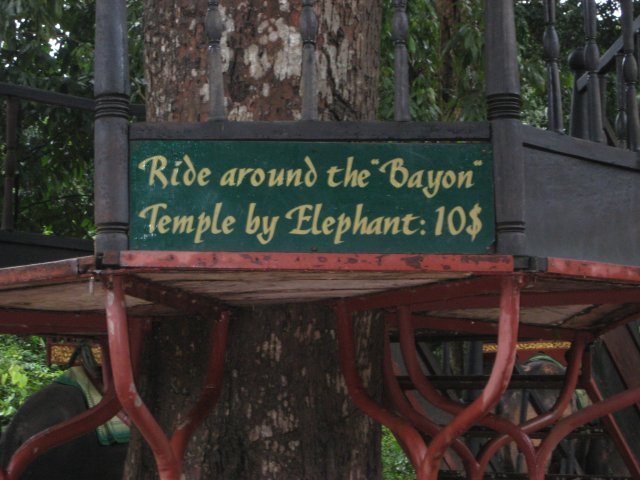

 The capital city,
Angkor Thom, was built in around 1180 by a very powerful ruler named King Jayawaraman 7. At this time the Khmer Empire was becoming sort of Buddhist
although the kings were considered to be deities.
The capital city,
Angkor Thom, was built in around 1180 by a very powerful ruler named King Jayawaraman 7. At this time the Khmer Empire was becoming sort of Buddhist
although the kings were considered to be deities.
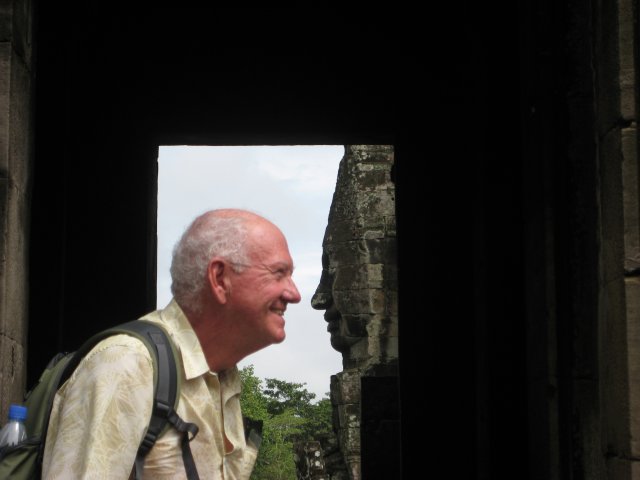
The Bayon temple,
 also, built in about 1180 is noted for its 54 towers and walls
covered with bas relief which tell remarkably detailed stories of that era in
Cambodia’s history. The 54 towers (not all remain fully intact) represent the
54 provinces that once made up the empire. Each tower has 4 faces looking
towards the 4 points of the compass. The faces are, apparently, a combination
of the Buddha and King J the 7th. These mysterious faces are very
famous and seen in the movies including the Tomb Raiders (Lei was very proud of
this fact). I do not recommend enduring the agony of watching Tomb Raiders just
for a few minutes in the temple.
also, built in about 1180 is noted for its 54 towers and walls
covered with bas relief which tell remarkably detailed stories of that era in
Cambodia’s history. The 54 towers (not all remain fully intact) represent the
54 provinces that once made up the empire. Each tower has 4 faces looking
towards the 4 points of the compass. The faces are, apparently, a combination
of the Buddha and King J the 7th. These mysterious faces are very
famous and seen in the movies including the Tomb Raiders (Lei was very proud of
this fact). I do not recommend enduring the agony of watching Tomb Raiders just
for a few minutes in the temple.

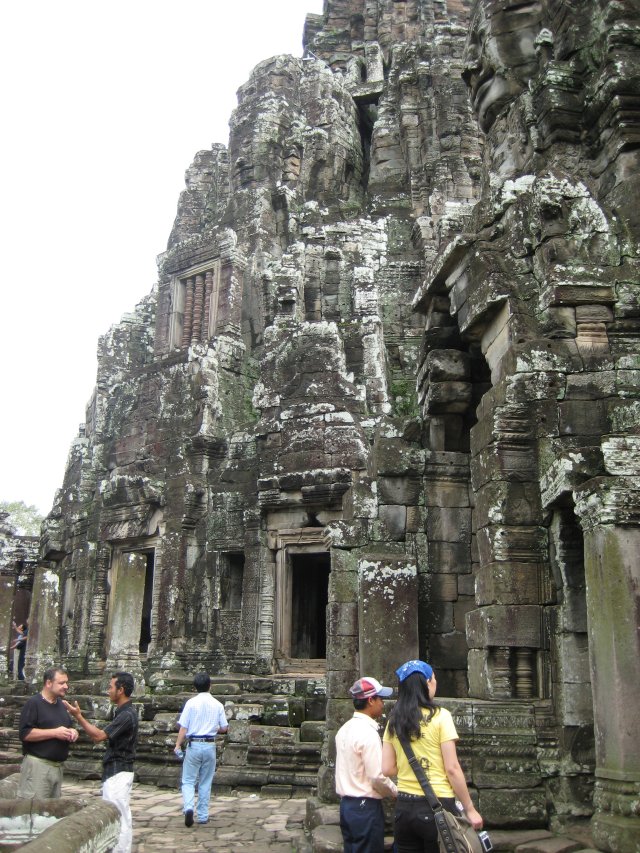

We spent a long, very sweaty and hot time going over the bas relief carvings.
They depict day to day life of the average Khmer and Chinese people during the
Angkor times of glory. I now know that in the 12th century they did
cock fights, kick boxing, picked lice from one another’s heads, played chess,
cheated in commerce with their weights and measures,
kick boxing, picked lice from one another’s heads, played chess,
cheated in commerce with their weights and measures, did pig roasting
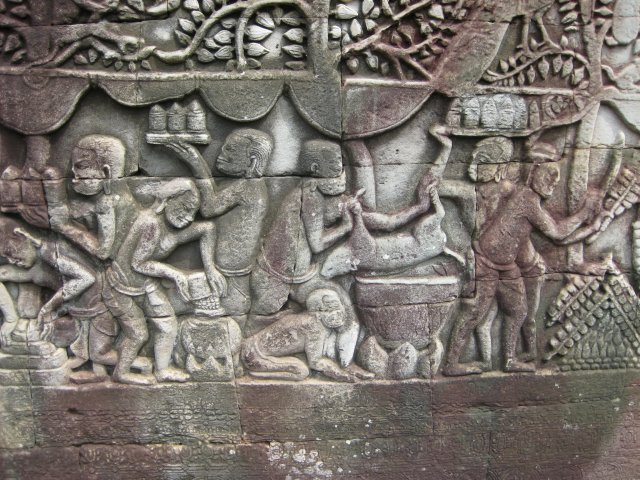 and all
kinds of stuff that today is easy to comprehend (well, maybe not the lice part).
and all
kinds of stuff that today is easy to comprehend (well, maybe not the lice part).
There were also major historical events depicted such as a major naval battle
(about 1170AD) in the Tonle Sap when the Khmer and their Chinese allies defeated
the Cham (people from south Vietnam)
such as a major naval battle
(about 1170AD) in the Tonle Sap when the Khmer and their Chinese allies defeated
the Cham (people from south Vietnam)
After seeing the temple we checked out the Elephant Terrace where King J the 7th
liked to watch parades and other events including tight wire circus acts with
the wire suspended between 12 towers.
where King J the 7th
liked to watch parades and other events including tight wire circus acts with
the wire suspended between 12 towers.
After lunch we were ready for the big tour event! It was time to go visit the very famous Angkor Wat (Wat means temple so this is Temple City). Angkor Wat, which is outside the walls of Angkor Thom, was built by an earlier Khmer king, Suryavarman 2, in around 1113-51 time frames. This temple has a strong Hindu flavor as King S the 2nd wanted to create his very own Mt. Meru and its environment. Mt. Meru is a sacred mountain in Hindu and Buddhist mythology which is considered the center of all spiritual and physical universes. Mt. Meru is the highest in a cluster of 5 peaks and is surrounded by the ocean.
The main temple of Angkor Wat has a central tower (Mt. Meru) and 4 surrounding
towers
 and a huge moat on all four sides. The moats are not for protection but
symbolize the ocean. The whole temple complex is about 3000X2400 feet in width
and depth.
and a huge moat on all four sides. The moats are not for protection but
symbolize the ocean. The whole temple complex is about 3000X2400 feet in width
and depth.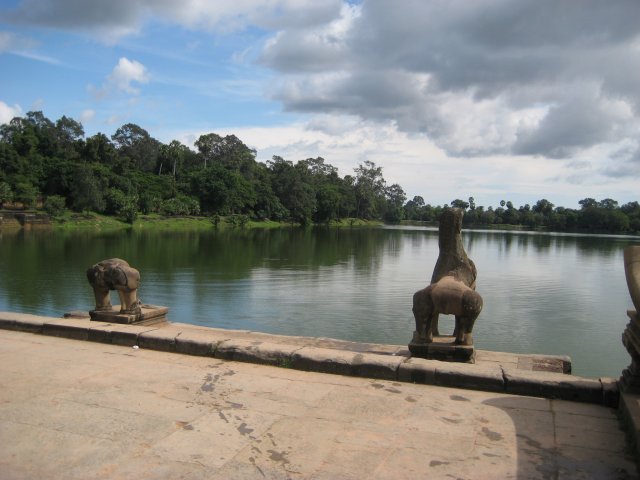
Beneath the central tower is a stone that is the center of the universe and JJ
had an opportunity to stand there. The temple also has walls covered with the
bas relief stories.
The temple also has walls covered with the
bas relief stories.
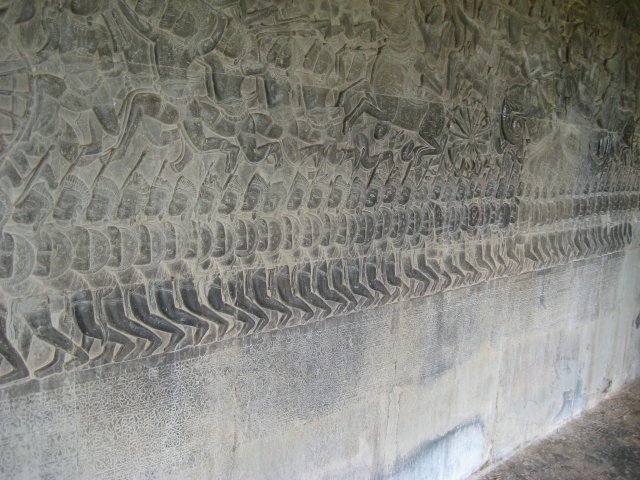 These tended to be a bit more fanciful than the ones at Bayon. There was one whole wall depicting the bad things that will happen in
Hindu Hell versus the bliss of Heaven. There was even an engraving of King S
the 2nd himself.
These tended to be a bit more fanciful than the ones at Bayon. There was one whole wall depicting the bad things that will happen in
Hindu Hell versus the bliss of Heaven. There was even an engraving of King S
the 2nd himself.
During the recent civil war the Khmer Rouge used Angkor Wat as a headquarters
and hospital area. There are still bullet holes left from the battles that
occurred here. Fortunately, not much damage was done to the temple.
A one afternoon visit to Angkor Wat is not very satisfying but that is all the time we had. The stifling heat and crowds present a challenge to really absorbing all the mystery and beauty of the place. Perhaps an early morning visit would be a good idea.
Anyway, we finished up our day with dinner downtown at the Red Piano restaurant
with Diane. The three of us rode a “tuk tuk”
 from the hotel for only $2. Tuk
tuks are all over the place and very low costs but a bit risky in the traffic.
OK, no problem.
from the hotel for only $2. Tuk
tuks are all over the place and very low costs but a bit risky in the traffic.
OK, no problem.
We made good use of our last day, Sunday, Oct 14, in Cambodia. Lei picked us up
at 0830 and we were off to the Banteay Srei (=beautiful lady) temple which is
about 20 miles from Siem Reap. Along the way we discussed the issue of land
mines in Cambodia and how many foreign countries have pitched in the try and get
rid of them. We saw a number of musicians performing for the tourists who had
been disabled by the mines.
On the way out we had a good look at the country side with vistas of rice
fields,
 houses on stilts and local people
 selling their goods along the road.
Lei showed us how juice is recovered from the sugar palm fruit and made into a
very sweet sugar (only $1 ).
selling their goods along the road.
Lei showed us how juice is recovered from the sugar palm fruit and made into a
very sweet sugar (only $1 ).


The Banteay Srei temple was built in about 967AD and is very small compared to the ones we had already seen. However, this temple’s claim to fame is the pink stone and the amazingly intricate carvings which have lasted all these years.


Incidently, the Angkor temples were unknown to the western world until the mid-1800s. At that time some of the French colonial guys noticed these structures which had been completely overgrown by the forests. The French took it upon themselves to restore the temples and the rest is history. This process continues today and other countries are contributing to the restoration and preservation of these wonders. It is important to note that, unlike the older, recreated Mayan temples in Central America, the Angkor temples are all original stuff that has just been put back together.
Our final tour with Lei was to the Ta Prohm temple which was our favorite. The cool thing about Ta Prohm is that it has NOT been totally restored. Instead, the idea is to let us see what these places looked like before the discoveries by French archeologists in 1860s.
Wow, what a sight! It sure looks like a movie set (try Tomb Raiders) but this stuff is real. Ta Prohm was built in the 12th century by our friend King J the 7th for his mother!


We said goodbye to Lei and the driver at noon since we had enough tours and wanted to do some stuff on our own. It was a very clear and sunny afternoon, unlike the previous rainy and cloudy days, so we decided to go check out the Phnom Bakheng temple which is on top of one of the few hills in the whole area. This temple is noted for its spectacular sun rises and sun sets and I felt challenged since Lei had earlier told me I was too old to go up the temple steps! I found out that it was Lei who did not want to go up the steps! Another attraction for us was the potential elephant ride to the top of the hill.
This time we hired a tuk tuk piloted by our new best friend, Mr. Sony 2,
 to take
us to the hill. We had to stop at a gas station which is a collection of
discarded bottles filled with gasoline.
to take
us to the hill. We had to stop at a gas station which is a collection of
discarded bottles filled with gasoline.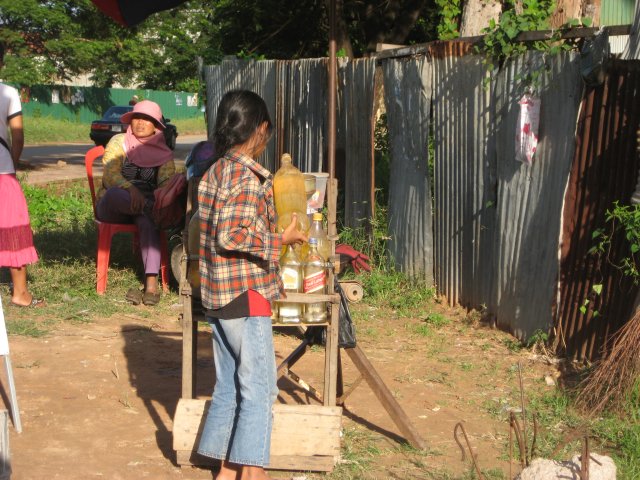 Our tuk tuk required exactly one Johnny
Walker Red Label bottle’s worth to top it off. The tuk tuk drivers always want
to wait for you at your destination; assuring they have a return fare and we
have a ride. We arrived at the trail head for the temple a bit too late to catch
the elephant express ride to the top. (The last elephant was departing as we
arrived). Anyway, there was only a short walk
Our tuk tuk required exactly one Johnny
Walker Red Label bottle’s worth to top it off. The tuk tuk drivers always want
to wait for you at your destination; assuring they have a return fare and we
have a ride. We arrived at the trail head for the temple a bit too late to catch
the elephant express ride to the top. (The last elephant was departing as we
arrived). Anyway, there was only a short walk
 up the dirt trail to the top and
then a scramble up the very, steep stairs to the temple’s perfectly flat viewing
area.
up the dirt trail to the top and
then a scramble up the very, steep stairs to the temple’s perfectly flat viewing
area.
The elephants were patiently waiting to return their passengers to the
parking area after sunset.


There were, indeed, marvelous views of the surrounding countryside and a great
chance to take a look at the areas we traveled during our stay. To the west and
south was the Tonle Sap. All around the countryside was flat with endless,
flooded rice fields and surrounding forests.
All around the countryside was flat with endless,
flooded rice fields and surrounding forests. The Angkor Wat temple was not
visible from here but we could see the top of the “Mt Meru” towers at Banyon
temple.
The Angkor Wat temple was not
visible from here but we could see the top of the “Mt Meru” towers at Banyon
temple.
 There were some distant hills to the north and east and, according to
Lei, these mountains are the source of the stone that was transported by
elephant drawn canal barges to build the temples.
There were some distant hills to the north and east and, according to
Lei, these mountains are the source of the stone that was transported by
elephant drawn canal barges to build the temples.
Phnom Bakheng means “Temple of 1000 Tourists Staring at the Setting Sun”.
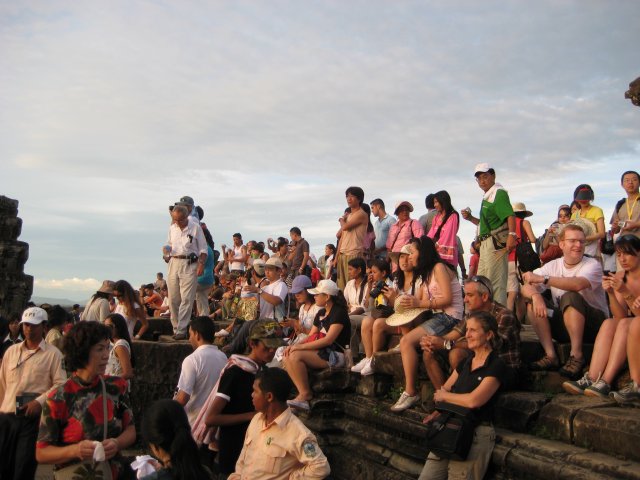 We
decided to leave a bit before sunset to avoid the traffic rush back down the
hill.
We
decided to leave a bit before sunset to avoid the traffic rush back down the
hill.
 By now we were walking at dark and through the forests. OK, no problem.
Mr. Sony 2 hailed us from among the zillion or so tuk tuks that were waiting for
their passengers to return from Phnom Bakheng.
By now we were walking at dark and through the forests. OK, no problem.
Mr. Sony 2 hailed us from among the zillion or so tuk tuks that were waiting for
their passengers to return from Phnom Bakheng.
After a pleasant, fairly cool ride through the Angkor Park we were delivered to
the Red Piano restaurant for dinner.
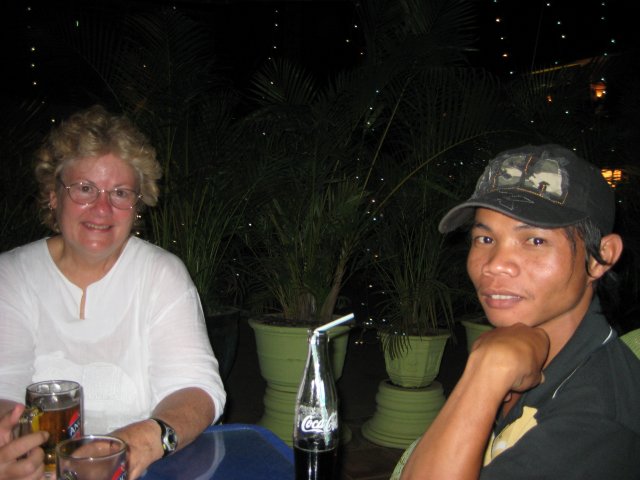 Naturally, Mr. Sony 2 waited for us and JJ
invited him to join us for dinner. He only had 2 Cokes. Mr. Sony 2 knew a
little English and he wanted to know “how old are you?” (My guide book said
that one should expect personal questions from the Khmer people.) I decided
that my usual humorous reply of “39” would be wasted on Mr. Sony 2 so I just
told him the truth-45. He also taught us a few Khmer words and got a big kick
out of my attempts to pronounce them.
Naturally, Mr. Sony 2 waited for us and JJ
invited him to join us for dinner. He only had 2 Cokes. Mr. Sony 2 knew a
little English and he wanted to know “how old are you?” (My guide book said
that one should expect personal questions from the Khmer people.) I decided
that my usual humorous reply of “39” would be wasted on Mr. Sony 2 so I just
told him the truth-45. He also taught us a few Khmer words and got a big kick
out of my attempts to pronounce them.
Thus ended our short and delightful visit to Cambodia. The next morning we had a short flight back to Bangkok. Then we connected on Singapore Airlines for the one way, costly trip to Singapore returning by 6PM to the Grand Plaza Park hotel for two more nights.
On our last day, Oct 16, in Singapore I showed JJ the wonders of Ft Canning
Park,

 we went to the highly decorative Sri Mariamman Hindu temple

 and had some
drinks on the 71st floor of the Stamford Hotel. What a view!
and had some
drinks on the 71st floor of the Stamford Hotel. What a view!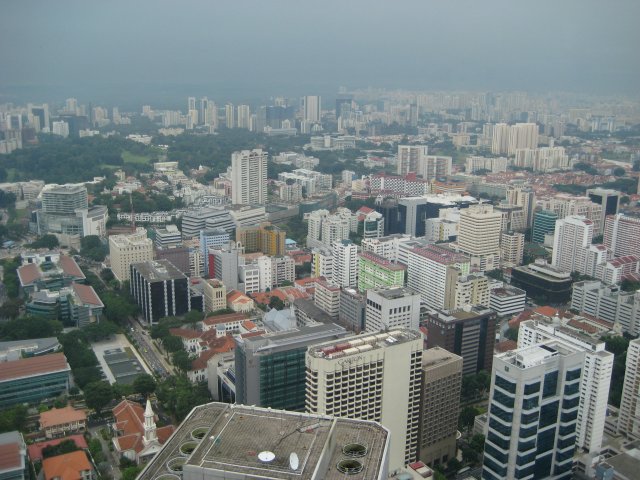
Finally, we departed our hotel on Oct 17 at 4:30AM (yuk) and got to the airport way too early for our 7:15AM departure. We noticed that Singapore taxi drivers always talk to their passengers, even in the wee hours of the morn, to boast about the local area. They are very proud of all the trees and green areas in the city. We had an uneventful, but long flight back on United Air via Tokyo, San Francisco and then arrived at Bonita on Oct 17 at 4PM PDT or Oct 18 at 7AM Singapore time. Regardless of the time zones it took 26.5 hours of travel and lots of jet lag to be home sweet home.
THE
 END
END